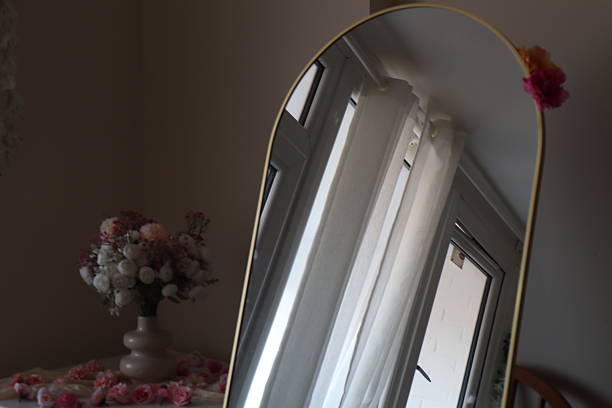
A large floor mirror is more than a functional object; it is a statement piece that enhances light, creates the illusion of space, and serves as a focal point in any room. However, its considerable size and weight also make it a significant safety hazard if improperly secured. The safest way to hang a large floor mirror is not to hang it from a single point at all, but to employ a multi-faceted approach that combines robust hardware with strategic placement, effectively anchoring the mirror to the wall to prevent tipping or falling. This process requires careful consideration of the wall material, the selection of appropriate fixtures, and an understanding of the mirror’s distribution of weight.
The foundation of safety begins with identifying the wall’s composition, as this dictates the hardware required. For standard drywall or plaster, hollow-wall anchors are insufficient for the substantial load of a large mirror. The only reliable choice is to locate and drill directly into the wall studs, the wooden frames behind the wall surface. Studs provide the necessary structural integrity to hold significant weight. Using a stud finder is an essential first step. If the mirror’s mounting points do not align perfectly with stud spacing, a horizontal mounting board, such as a French cleat or a sturdy piece of plywood, can be first secured to the studs. This board then acts as a stable platform onto which the mirror can be attached, distributing the weight across multiple studs and offering flexible placement.The hardware selected must be commensurate with the mirror’s weight. For mirrors that are particularly heavy, a French cleat system is widely regarded as one of the most secure methods. This system involves two interlocking metal or wooden rails: one is firmly screwed into the wall studs, and its matching counterpart is attached to the back of the mirror. The mirror then hangs on the wall-mounted piece, locking securely into place by gravity. This design offers exceptional stability and can support immense weight. Alternatively, for mirrors with keyhole slots or D-rings on the back, heavy-duty mirror screws or bolts should be used. These must be driven directly into the wall studs or the pre-installed mounting board. It is crucial to use all provided mounting points; if a mirror has two D-rings, both must be utilized to prevent the mirror from pivoting or pulling away from the wall.Beyond the primary mounting system, supplemental security measures are the hallmark of a truly safe installation. Adhesive mirror mastic or silicone pads applied to the back corners of the mirror provide an additional layer of protection. This adhesive bonds the glass to the wall, preventing any forward sway or vibration, which is especially important in households with children, pets, or in areas prone to seismic activity. Furthermore, installing a discreet safety cable or a metal Z-clip at the bottom of the mirror, which is then anchored to the wall, can catch the piece should the primary fixtures ever fail. This redundant system ensures that the mirror is never reliant on a single point of failure.Finally, thoughtful placement contributes inherently to safety. Positioning the mirror away from high-traffic areas where it might be bumped, and ensuring it is not leaning at an angle unless specifically designed as a leaner with a stabilizing foot, minimizes risk. A large floor mirror should ultimately become a permanent, stable feature of the wall itself. By meticulously locating studs, employing a robust mounting system like a French cleat, and incorporating adhesive and safety cables, one transforms a potentially dangerous object into a secure and enduring element of home decor. This comprehensive approach ensures that the mirror’s reflective beauty can be enjoyed without a shadow of worry.